
Birthmarks: Understanding them
& Treatment OPTIONS
What YOU NEED TO KNOW ABOUT BIRTHMARKS | BRISBANE
Birthmarks are common skin markings that can appear anywhere on the body. There are over 150 different types of birthmarks and they vary in size, colour, and shape. Some birthmarks respond well to laser therapy, whilst others are best treated with surgery. For example, the majority of red birthmarks can be markedly reduced with laser treatment. However, the ideal treatment will depend on the diagnosis of your birthmark.
While most birthmarks are harmless, some can cause cosmetic concern or irritation. At Queensland Skin and Laser, we provide professional assessment and personalised treatment options to safely reduce the appearance of birthmarks or remove them completely. Learn more about your birthmark and the treatment options available in Brisbane.
What Are Birthmarks?
Birthmarks are common, occurring in 1 of 3 births. A birthmark is a mark that develops before or shortly after birth. A birthmarks is an area of skin that looks different from the surrounding skin due to pigment or blood vessels. They can be flat or raised, small or large, and range in colour from pink, red, brown, or black. Some birthmarks fade over time, while others persist into adulthood.
Birthmarks are not usually dangerous, but if you’re concerned about the appearance of your birthmark, assessment is important to confirm the type and determine if treatment is appropriate.

Birthmarks vary in colour, size, and texture. Each birthmark requires individual assessment.
Types of Birthmarks
Understanding the different kinds of birthmarks and how they behave.
1. Pigmented Birthmarks
- Moles (Congenital Nevi): Brown or black, can be small or large; some may carry a slight risk of melanoma and should be monitored.
- Becker’s Naevus: Light in childhood, increasing in colour, texture, and hair growth during puberty; often very large; extends deep into dermal and fat layers; contains elements of smooth muscle, hair, oil glands, melanin, and skin cells.
- Cafe-au-lait spots: Light to dark-brown patches, usually flat and harmless; sometimes associated with genetic conditions if numerous.
2. Vascular Birthmarks
- Port-wine stains: Red or purple flat marks caused by dilated capillaries.
- Haemangiomas: Raised, bright red or bluish marks that grow in infancy and sometimes shrink with age.
3. Other Rare Types
- Salmon patches (a.k.a. stork bites): Light pink marks that usually fade in early childhood.
- Sebaceous Nevus: a group of oil glands; generally located on the face or scalp; can be associated with BCCs and therefore should be monitored.
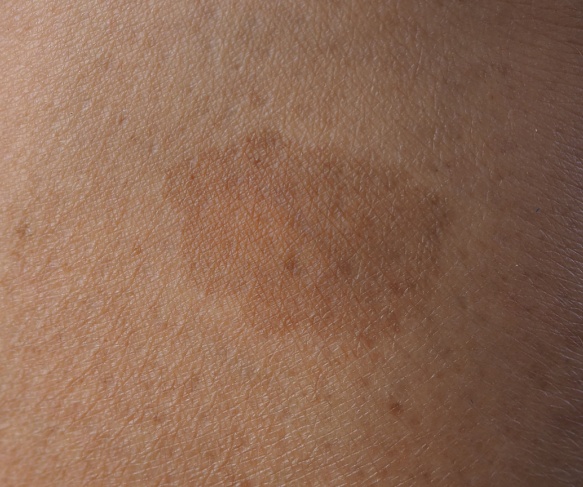
A light to medium brown, smooth-edged birthmark, known as a café-au-lait spot.
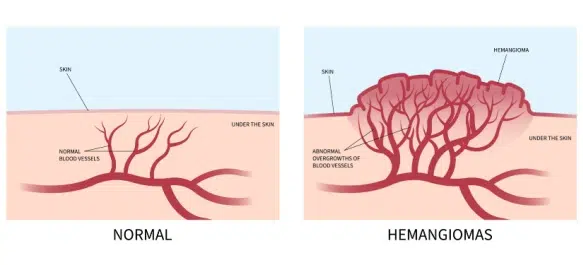
A haemangioma is a benign, vascular birthmark that appears as a red to purple, raised patch on the skin.
Causes of Birthmarks
HOW AND WHY BIRTHMARKS DEVELOP
Most birthmarks occur due to localised overgrowth of pigment cells or blood vessels during skin development in the womb. The exact cause is often unknown. They are not caused by anything the parents did and are generally harmless. However, some known risk factors r associations include:
- Family history of certain birthmarks
- Genetic predisposition in some pigmented or vascular types of birthmarks
- Rarely, multiple birthmarks may signal an underlying condition, so medical assessment is important
Birthmarks cannot be prevented, but sun protection and gentle skincare can reduce pigmentation changes or irritation.

How to spot concerning birthmarks
When to get a professional assessment
Most birthmarks are harmless, but you should have a birthmark checked by a doctor if it:
- Changes in size, colour, or shape
- Becomes raised, sore, or itchy
- Appears after birth and continues to grow
- Causes cosmetic or functional concern
If any of these factors apply to you, we suggest booking a free skin check to have your birthmark examined and diagnosed.
Treatment options for Birthmarks
Safe, effective solutions for cosmetic or functional concerns
Treatment of birthmarks depends on the type, size, location, and persistence of the birthmark. Diagnosis is the first step in the management of birthmarks. Treatment options may include:
- Surgical Removal / Excision – Complete removal for raised or larger marks. Suitable for certain pigmented or raised birthmarks.
- Light and Laser Therapy – Reduces redness or pigmentation. Most common for vascular or pigmented birthmarks. Several laser sessions will be required to remove or fade birthmarks.
- Topical Treatments – Sometimes used for minor pigmentation changes (limited effect).
Any surgical or invasive procedure carries risks. Before proceeding, you should seek a second opinion from an appropriately qualified health practitioner.
Birthmark Treatment Process
At Queensland Skin And Laser
Step-by-step journey from consultation to recovery
Consultation
Your journey begins with a detailed consultation with Dr. Mark Chernoff where he will assess the birthmark, discuss your goals, and recommend suitable treatment options. Most birthmarks are diagnosed visually, but in some cases a biopsy may confirm the type before treatment.
Procedure
Your treatment and procedures will be formulised after your initial consultation. In the clinic, treatment may involve laser therapy to reduce redness or pigmentation, or surgical excision for raised or stubborn marks. A numbing cream may be used for laser treatments, whilst local anaesthetic is used for surgical procedures.
Aftercare & Recovery
Following treatment, your skin may be red, tender, or slightly swollen for a few days. Your doctor will provide instructions for wound care, sun protection, and follow-up appointments to monitor results.
Results vary depending on the type, size, and location of the birthmark.
Possible Risks or Side Effects
Most treatments are safe, but all procedures carry some potential risks and side effects, including:
- Temporary redness or swelling
- Bruising
- Mild discomfort
- scarring (usually minimal)
- Risk of incomplete pigment reduction (laser)
Your doctor will discuss all risks before treatment to help you make an informed decision.
Cost of Laser & Surgical Treatments
Initial birthmark assessments are bulk billed at Queensland Skin and Laser. Laser treatments and surgical removal are not bulk-billed, but Medicare rebates often apply where eligible. Your doctor will provide a full breakdown of fees and rebates prior to any treatment, so you can make an informed choice. However, as a guide:
- 1064nm Nd:YAG Vascular Laser – from $150
- CO2 Laser – from $200
- Q-Switch Laser – from $350
- Package pricing for multiple sessions applies.
Why Choose QUEENSLAND SKIN AND LASER
for Birthmark Treatment?
Choose Queensland Skin and Laser for birthmark assessment and treatment because our medically-led team provides expert diagnosis, personalised treatment, and safe, effective results. We combine professional care with a patient-friendly environment, guiding you from consultation to recovery.

Expert-Led
Care
Led by Dr. Mark Chernoff, a seasoned physician with expertise in skin cancer detection, general and cosmetic dermatology, and advanced laser therapies, the clinic ensures high standards of care across all treatments.

Advanced
Technology
Queensland Skin and Laser integrates state-of-the-art laser systems, HIFU, RF needling, and photodynamic therapy, offering the latest in skin rejuvenation, tightening, and sun damage treatment.

Patient-Centred,
Boutique Experience
Patients experience a personalised, boutique environment where their concerns are met with unmatched professionalism and dedicated care.

Complimentary Cosmetic
Consultations
Clients receive a free consultation with the clinic’s cosmetic nurses, making expert skin advice accessible without upfront costs.

Flexible Payment
Plans
Offering weekly payment options through Zip Pay, the clinic ensures financial flexibility for both cosmetic and medical treatments.

Trusted Reputation
and Certifications
As a Fellow of the RACGP, an accreditation assessor, and an experienced dermatology professional, Dr. Chernoff and his team are recognised for their commitment to high standards, safety, and patient well-being.
Meet Dr Mark Chernoff
BSC (EXHP), MBBS (MELB), FRACGP, MFIN, CFTP
Dr Mark Chernoff earned a Bachelor of Science in Exercise and Health Physiology, followed by a Bachelor of Medicine and Bachelor of Surgery from the University of Melbourne in 2010. He began his postgraduate career at St. Vincent’s Hospital in Melbourne, specialising in general and plastic surgery.
Dr Chernoff serves as a Visiting Medical Officer in Emergency Medicine and works as a general practitioner in rural NSW. With extensive experience in skin cancer surgery, medical laser treatments and cosmetic medicine, he also contributes to medical education by supervising registrars for the Australian College of Rural and Remote Medicine and the Royal Australian College of General Practitioners.

To book an appointment, click the button above, call 07 3544 6425, or email admin@qldskinandlaser.com.
Find us here:
- Level 2 – 445 Upper Edward St
Spring Hill QLD 4000
Frequently Asked Questions
Birthmark Treatment Brisbane
From birth to adulthood: what you need to know about birthmarks
What types of birthmarks can be treated with laser?
Laser therapy is most effective for vascular birthmarks like port-wine stains or haemangiomas, and for pigmented marks such as some cafe-au-lait spots. The number of sessions depends on size, colour, and location.
Is birthmark removal painful?
Most surgical excisions are performed under local anaesthetic. Patients feel pressure during the procedure, but discomfort is minimal. During laser treatment, numbing cream can be applied for a more comfortable procedure. Mild redness or tenderness may occur afterwards.
Can all birthmarks be removed?
Not all birthmarks can be completely removed. Some may only lighten in colour or flatten with laser treatment. Raised birthmarks may be excised surgically if appropriate. Usually, a Becker’s Naevus cannot be removed. Diagnosis is the first step in the management of birthmarks.
Will my birthmark come back after treatment?
Recurrence is uncommon, but some pigmentation may persist. Your doctor will discuss realistic expectations for each type of birthmark. Book a free skin check at Queensland Skin and Laser to discuss your queries about your birthmark.
Are birthmark treatments safe for children?
Yes, birthmark treatment is safe for children, but assessment is essential. The doctor will recommend the safest approach and timing for laser or excision based on the child’s age and type of birthmark. In some cases, treatment in infancy or early childhood may be recommended (e.g., for haemangiomas and port-wine stains, which are easier to treat when small). However, any surgical or invasive procedure carries risks, so getting a second medical opinion is advised.
Any surgical or invasive procedure carries risks. Before proceeding, you should seek a second opinion from an appropriately qualified health practitioner.

Have any questions about cosmetic birthmark treatment or removal? Complete the form below and we will get back to you shortly.
 Online Marketing For Doctors