
Moles & Dysplastic Naevi:
When to Get Them Checked
EARLY ASSESSMENT MATTERS | BRISBANE
Are your moles being monitored for changes that could indicate risk? Moles are common skin growths, but some can develop unusual features over time. Dysplastic naevi, or atypical moles, may look different from ordinary moles and carry a higher risk of melanoma. Regular skin checks help detect these changes early and provide important information about your individual skin health.
At Queensland Skin and Laser, we assess moles, including dysplastic naevi, during bulk billed skin cancer checks. Our medical team can review your moles, explain what to watch for, and provide personalised advice on monitoring or treatment. Understanding your moles is an important step in skin cancer prevention, and arranging a check can give reassurance and peace of mind. Read on to learn more about moles and how we support early detection.
What Is a mole?
A mole, medically called a nevus, is simply a group of cells that make melanin (the pigment that gives skin its colour). Most moles pose no harm. They usually appear round or oval, flat or slightly raised, and range in colour from your natural skin tone to dark brown or black. Moles can form anywhere on the body.
Types of Moles
Moles can appear in many forms, and understanding the differences helps you monitor your skin effectively.
Typical (Common) Moles: Usually small, round, or oval, with smooth, clearly defined edges. They are evenly coloured, often light to dark brown, and may appear anywhere on the body. Most adults have multiple common moles, which generally remain stable over time. These moles are usually harmless but should be checked periodically, especially if any changes occur.
Atypical (Dysplastic) Moles: Often larger, irregularly shaped, and may display uneven pigmentation or blurred edges. Dysplastic naevi may appear anywhere on the body and can sometimes resemble melanoma, making monitoring important. People with multiple dysplastic moles or a family history of melanoma may be advised to have regular skin checks.
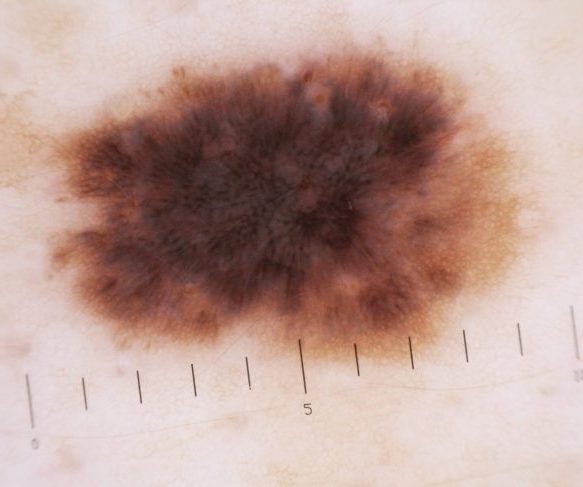
Close-up of a dysplastic naevus, highlighting its irregular shape, blurred border, and variation in colour.
How are Moles Diagnosed at
Queensland Skin and Laser?
Medically-Led Mole Removal for Safe, Smooth Results.
Dermatoscope Spot Check:
A dermatoscope magnifies a mole so doctors can examine its colour, shape, and structure in detail. This tool helps doctors identify features that the naked eye might miss.
Skin Cancer Check:
During a skin check at Queensland Skin and Laser, our doctor carefully examines your entire body, including all moles and spots. If a mole appears unusual, the doctor may photograph it to analyse it more closely or track changes over time.

When should a Mole Be assessed?
You should arrange a medical review if you notice:
- Change in size, shape, or colour
- Irregular, blurred, or jagged borders
- New pigmentation or patchy colour
- Itching, tenderness, or bleeding
- A mole that looks different to others on your skin
Any new or changing lesion should be considered for professional medical assessment.
Early detection of melanoma improves the likelihood of effective treatment.
Treatment options for
mole removal
Expert Mole Removal, Personalised for You.
The best method to remove a mole depends on whether a mole looks suspicious (needs testing for skin cancer), causes irritation, or causes cosmetic concern. At Queensland Skin and Laser in Brisbane, our team provides a range of treatment options for mole removal.
Surgical Removal
- Excision – The whole mole is cut out under local anaesthetic, usually with a few stitches. Healing takes 1–2 weeks and a small scar may remain. Often done if a mole is suspicious or cancerous.
- Punch – A small tool removes the entire mole. Best for small moles. Usually heals without stitches and leaves little or no scarring.
- Shave – The raised part of a mole is shaved flat under local anaesthetic. No stitches are needed, recovery is quick, and scarring is minimal.
Non-Surgical Removal
- Cryotherapy – Liquid nitrogen freezes off certain harmless moles, skin tags, and sun spots. Quick, effective, and nearly painless. Larger lesions may need more than one session.
- Radiofrequency – Uses a fine electrode tip to gently shave raised, harmless moles. Heals quickly with minimal bleeding, swelling, or scarring. Recovery takes about a week.
- Laser – We use the latest in laser technology to remove unwanted moles, skin lesions, skin tags, warts, and scars. Recovery usually takes a few days.
Skin Cancer Check & Mole Removal Process At Queensland Skin And Laser
What to Expect During Your Treatment
Consultation
Your journey begins with an in-depth consultation with Dr. Mark Chernoff where he will conduct a thorough skin examination. This includes:
- Detailed Medical History: Understanding your personal and family history related to skin conditions and sun exposure.
- Full-Body Skin Assessment: Utilising advanced diagnostic tools to meticulously examine your skin for any suspicious lesions or changes.
If an abnormality is detected, a biopsy may be performed to determine the nature of the lesion.
Procedure
Your treatment and procedures will be formulised after your initial consultation. Treatment options offered at Queensland Skin and Laser include: excision, biopsy punch, laser, cryotherapy, and radiofrequency.
Recovery
Recovery is usually straightforward with minimal downtime, although it varies depending on the procedure and individual factors. Detailed instructions are provided to promote healing and minimise infection risk, and follow-up appointments will be scheduled to monitor healing progress and detect any early signs of recurrence.
To help healing and reduce scarring:
- Keep the area clean and dry
- Avoid direct sunlight on the wound
- Try not to stretch the area, as this can cause bleeding or widen the scar
Adhering to post-operative care guidelines is crucial for optimal recovery and long-term skin health. At Queensland Skin and Laser, we are committed to supporting you through each stage of the process, ensuring the highest standards of care and personalised attention.
Any surgical or invasive procedure carries risks. Before proceeding, you should seek a second opinion from an appropriately qualified health practitioner.
Reducing Melanoma Risk
Protecting Your Skin: Practical Steps to Reduce Melanoma Risk
Maintaining healthy skin and reducing melanoma risk involves practical daily habits and regular skin cancer check-ups. General prevention recommendations include:
- Limiting UV exposure
- Using sunscreen appropriately
- Wearing protective clothing and hats
- Avoiding solariums and tanning beds
- Performing regular self-skin checks
- Attending regular skin cancer checks as advised
These measures do not remove melanoma risk entirely but may help reduce it.
Possible Risks or Side Effects
Undergoing mole removal surgery is generally safe, but potential risks and side effects include:
- Pain and Tenderness: Discomfort around the surgical site is common post-procedure.
- Bleeding: Some bleeding may occur during or after surgery.
- Infection: There’s a risk of infection at the incision site.
- Scarring: Surgical removal can result in noticeable scars.
- Swelling or Bruising: Temporary swelling or bruising around the treated area may develop.
- Nerve Damage: Damage to nerves can lead to numbness or changes in sensation.
- Poor Wound Healing
Our experienced medical team will discuss all potential risks with you before treatment and guide you through the safest option for your skin. Book a consultation to learn more.
Cost of Mole Checks
& Removal
We understand that cost is an important consideration for our patients. At Queensland Skin and Laser, we strive to provide affordable care.
Comprehensive Mole Check
We offer bulk-billed skin checks, making our services more accessible to those who need an urgent skin check.
Biopsy Procedures
Should a biopsy be necessary, fees are discussed upfront, with Medicare rebates available to offset costs.
Mole Removal
Costs vary depending on the treatment approach. Detailed quotes are provided after consultation, with Medicare rebates available to offset costs.
Why Choose QUEENSLANDSKIN AND LASER
for Mole Assessment & removal?
Choose Queensland Skin and Laser for mole removal because our medically-led team ensures every spot is thoroughly assessed for safety and treated with precision, care, and the most appropriate technique for your skin.

Expert-Led
Care
Led by Dr. Mark Chernoff, a seasoned physician with expertise in skin cancer detection, general and cosmetic dermatology, and advanced laser therapies, the clinic ensures high standards of care across all treatments.

Advanced
Technology
Queensland Skin and Laser integrates state-of-the-art laser systems, HIFU, RF needling, and photodynamic therapy, offering the latest in skin rejuvenation, tightening, and sun damage treatment.

Patient-Centred,
Boutique Experience
Patients experience a personalised, boutique environment where their concerns are met with unmatched professionalism and dedicated care.

Complimentary Cosmetic
Consultations
Clients receive a free consultation with the clinic’s cosmetic nurses, making expert skin advice accessible without upfront costs.

Flexible Payment
Plans
Offering weekly payment options through Zip Pay, the clinic ensures financial flexibility for both cosmetic and medical treatments.

Trusted Reputation
and Certifications
As a Fellow of the RACGP, an accreditation assessor, and an experienced dermatology professional, Dr. Chernoff and his team are recognised for their commitment to high standards, safety, and patient well-being.
Meet Dr Mark Chernoff
BSC (EXHP), MBBS (MELB), FRACGP, MFIN, CFTP
Dr Mark Chernoff earned a Bachelor of Science in Exercise and Health Physiology, followed by a Bachelor of Medicine and Bachelor of Surgery from the University of Melbourne in 2010. He began his postgraduate career at St. Vincent’s Hospital in Melbourne, specialising in general and plastic surgery.
Dr Chernoff serves as a Visiting Medical Officer in Emergency Medicine and works as a general practitioner in rural NSW. With extensive experience in skin cancer surgery, medical laser treatments and cosmetic medicine, he also contributes to medical education by supervising registrars for the Australian College of Rural and Remote Medicine and the Royal Australian College of General Practitioners.

To book an appointment, click the button above, call 07 3544 6425, or email admin@qldskinandlaser.com.
Find us here:
- Level 2 – 445 Upper Edward St
Spring Hill QLD 4000
Frequently Asked Questions About
Mole Removal Brisbane
Do I need to have my mole checked for skin cancer before removal?
Yes. Before any cosmetic mole removal, your mole should be examined by a qualified practitioner to ensure it’s safe to treat. This assessment helps rule out any medical concerns and guides which removal method (such as laser, radiofrequency, or surgical excision) is most suitable. Therefore, book a mole assessment at Queensland Skin and Laser to ensure safe treatment.
What removal methods are available for moles and skin lesions?
Depending on the mole type, location, and your skin, removal methods may include laser, radiofrequency, or minor surgical techniques such as punch or shave excision. Each option offers different benefits in terms of precision, comfort, and healing. Hence, our experienced team will recommend the best technique for your mole and skin type during consultation.
Is mole removal truly “permanent” or can the mole come back?
It is possible for moles to grow back if some cells from the mole were left after the initial removal, however it is unlikely. If you want to make sure your mole does not grow back, discuss surgical methods of mole removal with Dr Mark.
Is it safe to remove moles at home?
No, it is definitely not safe to attempt to remove moles at home. This may result in bleeding and infection. Always consult your GP if you have concerns about moles or wish to have them removed. Protect your skin and book a professional mole check before considering removal.
Will there be a scar after mole removal, and how visible will it be?
All mole removal methods carry a small risk of scarring, but techniques such as laser and radio frequency are designed to minimise this. The outcome depends on the mole’s depth, location, and your skin’s healing response. Therefore, your practitioner will discuss expected results and aftercare steps to help your skin heal beautifully.
Is cosmetic mole removal covered by Medicare or insurance?
If the mole is being removed purely for cosmetic reasons, it’s generally not covered by Medicare or private health insurance. However, if there’s a medical indication or concern, partial coverage may apply. Our team can guide you through what’s included and provide transparent pricing before your treatment.
On which parts of the body do moles form?
Moles can appear anywhere on your body, including between fingers or toes, on the face, under the armpits and even under the nails. Our Brisbane clinic offers various procedures, including surgical excision and advanced laser therapies, to ensure effective and safe removal.
Any surgical or invasive procedure carries risks. Before proceeding, you should seek a second opinion from an appropriately qualified health practitioner.

Have any questions about dysplastic naevi or mole removal in Brisbane? Complete the form below and we will get back to you shortly.
 Online Marketing For Doctors